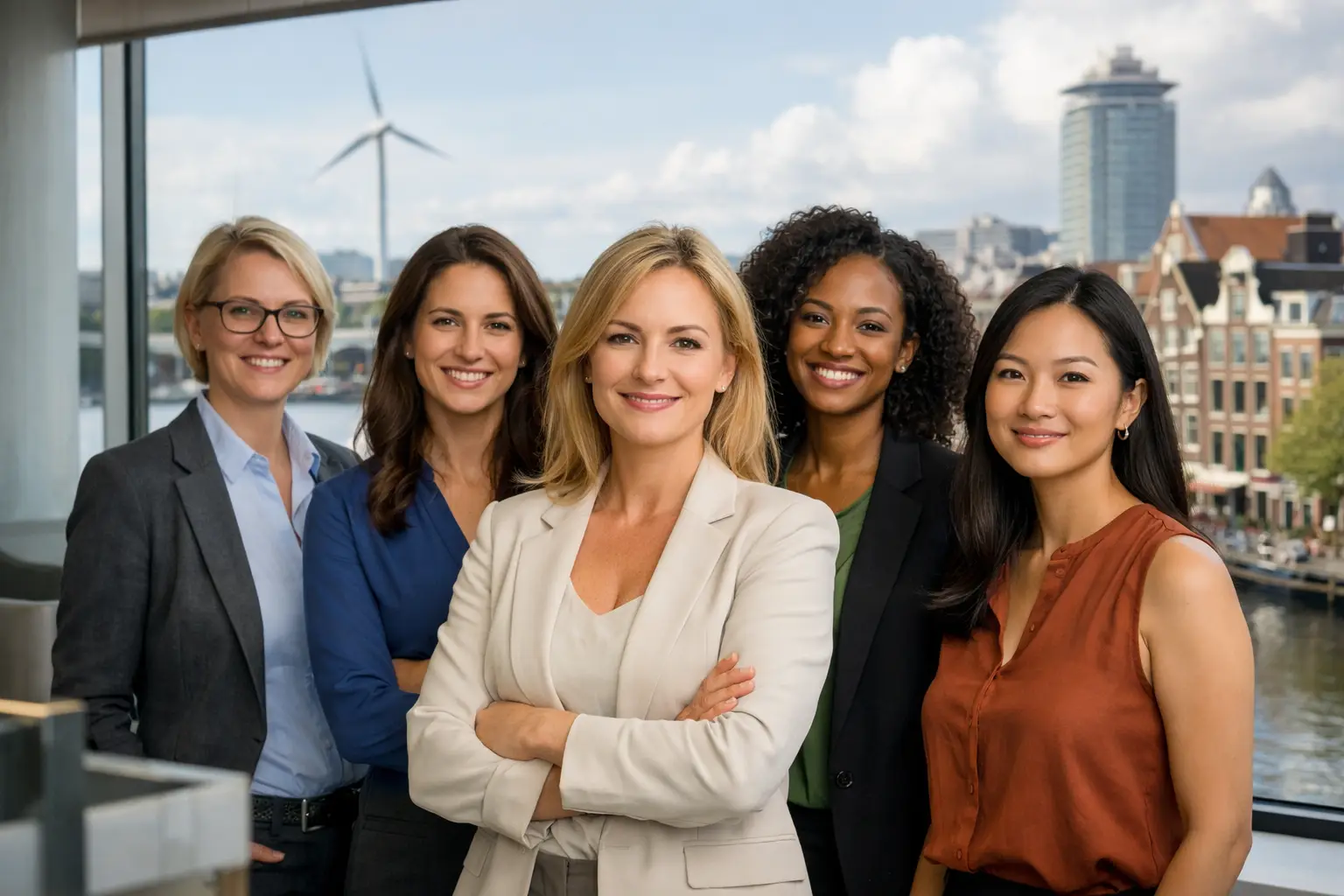
The conversation around the top women in Dutch tech usually starts too late - after the funding round, after the exit, after the keynote, after someone else has already framed the story. That lag matters. In a market as internationally connected as the Netherlands, visibility is not a vanity metric. It affects hiring, deal flow, speaking opportunities, board access, and who gets recognized as the face of innovation.
The Dutch tech ecosystem has no shortage of female leaders. What it does have, at times, is a pattern of under-indexing their influence in mainstream coverage. If you work in startups, venture, enterprise innovation, policy, or product, knowing who is shaping the market is practical intelligence. It tells you where capital is moving, which themes are gaining traction, and whose leadership is defining the next phase of European tech.
This is not a definitive ranking. It is a curated editorial view of women whose work has materially shaped Dutch tech, whether through company building, investment, ecosystem leadership, or public influence.
Why the top women in Dutch tech matter beyond representation
Representation is part of the story, but not the whole story. These women are not notable simply because they are women in a still-uneven industry. They matter because they have built companies, allocated capital, influenced regulation, and expanded what leadership looks like in one of Europe’s most active technology hubs.
The Netherlands sits at an interesting intersection. It is small enough for ecosystem moves to ripple quickly, yet global enough that Dutch founders, investors, and operators are in constant conversation with London, Berlin, Paris, and the Nordics. That means leaders in Dutch tech often have impact beyond national borders. When women gain visibility here, it can shape broader European narratives around who gets backed, quoted, and promoted.
It also matters for talent. Early-career professionals do not just look for jobs. They look for signals. Who is on stage. Who is founding AI companies. Who is writing checks. Who is leading public tech institutions. Those signals influence career ambition in ways the sector still underestimates.
10 top women in Dutch tech to know
Neelie Kroes
If you want to understand modern Dutch tech advocacy, start with Neelie Kroes. Long before “ecosystem building” became standard startup language, she was helping position the Netherlands as a serious digital player in Europe. Her work in European policy and later in startup advocacy gave Dutch tech something many markets still struggle to build - political visibility tied to business ambition.
Kroes has been especially important in connecting startup growth with policy credibility. That combination matters in sectors like AI, cybersecurity, and digital infrastructure, where regulation is not a side issue. It is part of the business environment.
Princess Mabel van Oranje
Princess Mabel van Oranje has played a distinct role at the intersection of technology, digital rights, and social impact. Through work tied to responsible tech and better internet governance, she represents a leadership model that goes beyond pure startup metrics.
That may sound less commercial than venture-backed scale stories, but it would be a mistake to dismiss it. The Dutch market is increasingly shaped by debates around privacy, platform power, child safety online, and ethical innovation. Leaders who can connect tech progress with civic responsibility are becoming more relevant, not less.
Gillian Tans
Gillian Tans remains one of the clearest examples of Dutch-born global tech leadership. Best known for her long leadership trajectory at Booking.com, including serving as CEO, she helped scale one of Europe’s most significant internet companies from inside the Netherlands.
Her importance is twofold. First, she is tied to one of the biggest digital success stories associated with Dutch tech. Second, she demonstrates that operational leadership at scale deserves as much attention as founder mythology. Not every influential tech leader is the original founder, and that distinction matters for readers building careers in product, growth, and executive management.
Margarita Louis-Dreyfus
Margarita Louis-Dreyfus is not always placed in the same conversation as startup founders, but her influence in Dutch business and investment circles makes her relevant to the broader tech landscape. Based in the Netherlands, she represents the kind of capital-and-governance presence that often shapes innovation behind the scenes.
This is where the conversation gets nuanced. Not every important figure in tech is coding, founding, or pitching seed rounds. Some influence the ecosystem through investment networks, strategic capital, and cross-sector business leadership. In a market where tech increasingly touches logistics, food, climate, and trade, that broader lens matters.
Annemarie van Gaal
Annemarie van Gaal is better known in some circles as an entrepreneur, investor, and public business voice than as a conventional tech executive. Still, that is exactly why she belongs in this discussion. Dutch tech does not operate in a silo. It overlaps with media, entrepreneurship, SME growth, and public business culture.
Van Gaal’s role in normalizing female business leadership has had downstream effects for tech. Visibility in entrepreneurship is cumulative. When more women become legible as builders and decision-makers across sectors, the path into startup and innovation leadership becomes easier to imagine.
Yonca Braeckman
Yonca Braeckman has become a familiar name in Dutch startup circles through her work as co-founder of Impact Shakers and her broader advocacy around inclusive entrepreneurship. Her presence is particularly relevant for readers watching the future of startup support systems, not just startup headlines.
Incubation, access, and founder development can sound less glamorous than fundraising announcements, but they are where ecosystem culture is often made. Braeckman’s work speaks to a real shift in European tech - one where inclusion is increasingly treated as infrastructure rather than side programming.
Isabelle Olsson
While Swedish by origin, Isabelle Olsson’s profile has often resonated strongly across the Dutch and European tech community because of her role in design leadership at Google and her visibility as a woman shaping globally used technology products. She is a useful reminder that Dutch tech readers often think regionally, not just nationally.
That may seem like a stretch in a list centered on Dutch tech, but the Netherlands has always been outward-looking. Talent, inspiration, and leadership signals move across borders fast. For a Dutch audience, influential women in nearby European tech scenes often matter because they shape local expectations around design, product thinking, and executive presence.
Kanar Albaz
Kanar Albaz has built a strong profile in the Netherlands through her work across startup community building, investment, and advocacy for women in tech. She represents a newer generation of ecosystem leadership - highly networked, visibly international, and closely connected to founder support.
Her relevance comes from proximity to where many career readers actually are: early-stage companies, startup programs, community-led growth, and ecosystem events. Not every influential figure sits atop a mature public company. Some are powerful because they shape who gets introduced to whom, who gets seen, and who gets brought into the room.
Janneke Niessen
Janneke Niessen is one of the most recognizable names in conversations about female entrepreneurship in the Netherlands. As a founder and investor, and through her public advocacy for women in business and tech, she has helped make gender equity in innovation feel like a mainstream economic issue rather than a niche diversity topic.
That shift is significant. Dutch tech has matured to the point where inclusion can no longer be treated as branding. It affects performance, access to talent, and founder pipeline quality. Niessen’s influence sits right at that intersection of entrepreneurship, investment, and public narrative.
Constantijn-level ecosystems need more female counterparts
This final spot is intentional rather than personal. Dutch tech has produced visible male ecosystem figures whose names have become shorthand for startup ambition. The challenge now is not whether women are present. It is whether the market is willing to build the same level of repeated recognition around female leaders across investment, policy, deep tech, AI, and scale-ups.
That means editors, event organizers, PR teams, investors, and founders all have a role to play. The issue is rarely a complete lack of women worth covering. It is often a repeat-exposure problem.
What makes a leader one of the top women in Dutch tech?
There is no perfect formula, and that is worth stating plainly. Some leaders stand out through company scale. Others through policy influence, ecosystem building, or sector expertise. If you only measure success by unicorn status or venture rounds, you miss a large share of how power works in European tech.
A better test is impact over time. Has this person changed how the ecosystem operates? Have they opened access, shaped a category, moved capital, influenced public debate, or built something durable? That framework tends to produce a more honest picture of leadership, especially in a market where many forms of influence are distributed rather than concentrated.
It also prevents a common mistake in women-in-tech coverage: reducing people to inspiration. Inspiration has its place, but serious readers want more than motivational framing. They want to know who is affecting markets and institutions.
The visibility gap is still a market issue
The Netherlands has made progress, but the visibility gap has not disappeared. Female leaders are still often covered differently from male peers - with more emphasis on identity, less on strategy, and less repetition over time. That repetition point matters because recognition compounds.
For media brands with an editorial mission around representation, this is where the work becomes concrete. It is not only about publishing profiles during key calendar moments. It is about integrating women into everyday coverage of funding, regulation, AI adoption, cybersecurity leadership, and executive movement. That is how visibility becomes normal rather than exceptional.
DutchTechOnHeels sits naturally in that conversation because it treats women’s presence in tech as part of the news itself, not an add-on to it.
Where to watch next
If you are tracking the next wave of top women in Dutch tech, keep an eye on three areas: AI leadership, climate and energy tech, and venture capital. Those are the spaces where influence is being built right now, and they will shape who becomes widely recognized over the next few years.
The smartest move for readers is not just to memorize names. It is to follow patterns - who keeps appearing across funding news, policy panels, operator communities, and sector-specific conversations. Visibility is often the trailing indicator. Real influence usually shows up first in the work.
The better the ecosystem gets at spotting that early, the stronger Dutch tech becomes for everyone trying to build a career in it.