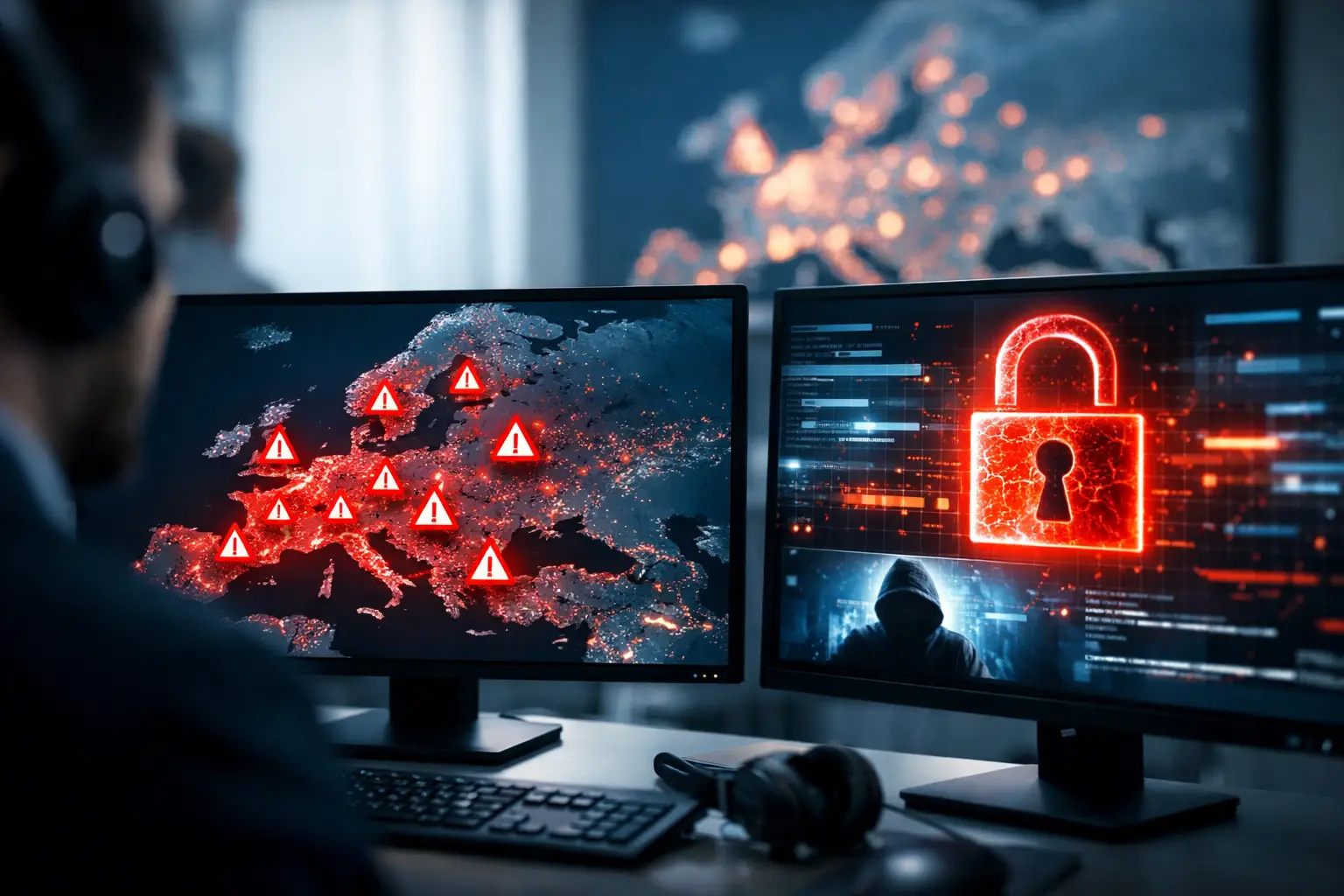
A hospital diverts patients after a ransomware attack. A city service goes offline. A manufacturer pauses operations because one supplier was compromised three steps back in the chain. Cybersecurity incidents in Europe are no longer isolated IT stories - they are business, public service, and leadership stories, too.
For anyone working in the European tech ecosystem, that shift matters. Cyber risk now touches policy, procurement, hiring, brand trust, and board-level decision-making. It also changes who gets heard in the room. Security can no longer sit with a narrow technical team while everyone else waits for updates. The strongest organizations are treating it as cross-functional work, which creates more space for legal, operations, communications, and risk leaders - including many women whose roles have historically been underrecognized in technical crisis response.
Why cybersecurity incidents in Europe keep accelerating
The short version is that the attack surface keeps expanding faster than many organizations can adapt. Europe has pushed hard on digital transformation across finance, health, transport, education, and government. That progress brings efficiency, but it also creates more endpoints, more vendors, more cloud dependencies, and more identity-based vulnerabilities.
At the same time, threat actors have become more organized. Ransomware groups now operate like businesses, with affiliates, negotiation playbooks, and targeted campaigns. State-linked operations add another layer, especially when geopolitical tensions rise. Then there is the less dramatic but equally damaging category of incidents caused by misconfigurations, weak access controls, and delayed patching.
Europe also faces a coordination challenge. The region is digitally connected but operationally fragmented. A company may operate across multiple countries while dealing with different regulatory expectations, language requirements, legacy systems, and procurement standards. That makes incident response harder, not easier.
The sectors seeing the most pressure
Healthcare remains one of the clearest pressure points. Hospitals and care networks cannot tolerate much downtime, which makes them attractive targets. Many also run on a mix of modern and outdated systems, often under budget constraints. When an attack hits, the impact is immediate and human.
Public sector organizations are under similar strain. Municipalities, agencies, and local authorities hold valuable data but often lack the resources of large private enterprises. Attackers know that public disruption creates headlines, political pressure, and urgency.
Manufacturing is another major concern across Europe, especially in countries with deep industrial supply chains. An incident does not need to begin inside a factory to halt production. It can start with a software provider, logistics partner, or managed service vendor. That is why third-party risk has moved from compliance language to operational reality.
Financial services usually have stronger security maturity, but that does not make them immune. It simply changes the nature of the threat. More advanced institutions are often dealing with fraud, credential abuse, API exposure, and coordinated campaigns that blend cyber and reputational tactics.
What cybersecurity incidents in Europe are revealing about resilience
The most telling lesson is that prevention alone is not enough. Every security leader wants to stop incidents before they happen, but mature organizations now assume some level of compromise is possible. The differentiator is resilience - how quickly teams detect, contain, communicate, and recover.
That sounds straightforward, but resilience is where many weaknesses show up. A company may invest in security tools yet still struggle to answer basic questions during an incident: who owns the decision to shut down a system, who notifies customers, who speaks to regulators, and who supports employees if operations are disrupted?
This is also where leadership quality becomes visible. In a real incident, the best technical controls matter, but so do calm communication, trust across teams, and clear authority. Security is often described as a talent problem, and that is partly true. But it is also a leadership design problem.
European organizations that respond well usually share a few traits. They rehearse. They know their critical assets. They understand which vendors matter most. And they do not treat crisis communications as an afterthought.
Regulation is raising the bar, but not solving everything
Europe is not short on regulatory momentum. NIS2, DORA, GDPR enforcement, and national cyber requirements are pushing organizations toward stronger governance, reporting, and accountability. That is good news in one sense. Cybersecurity is getting the policy attention it deserves.
Still, compliance does not automatically create readiness. A company can meet documentation requirements and remain poorly prepared for a live attack. Checklists help standardize expectations, but incidents rarely follow a checklist. They unfold in gray areas, with incomplete information and competing priorities.
There is also a practical tension here for startups and scale-ups. Larger enterprises may have dedicated compliance, security, and legal teams. Earlier-stage companies often have one security lead, an outsourced provider, or shared responsibility across engineering and ops. The expectations are rising across the board, but the capacity to meet them is uneven.
That gap matters for the wider ecosystem because smaller vendors are increasingly part of enterprise and public sector supply chains. If resilience is only strong at the top layer, the system stays exposed.
The people side of incident response still gets too little attention
Cybersecurity coverage often focuses on threat actors, tools, and regulation. Less often, it looks at the people doing the work under pressure. Incident response is exhausting. Teams make decisions with limited visibility, long hours, and high stakes. Burnout is common, and recognition is not.
That matters for inclusion as much as operations. If cybersecurity functions are built around constant crisis mode, rigid hierarchies, and narrow ideas of expertise, they will continue to filter out strong talent. Europe needs more people in security, but it also needs broader pathways into security leadership.
This is where representation matters in practical terms, not just cultural ones. Diverse teams tend to bring stronger challenge, better communication styles, and different risk perspectives. In incident response, those qualities are useful. The field does not only need more elite technical specialists. It needs strategists, translators, operators, policy thinkers, and communicators who can help organizations respond as systems, not silos.
For platforms like DutchTechOnHeels, that is part of the bigger story. Visibility in cybersecurity should not stop at founders and CTOs. The women shaping resilience in governance, trust, infrastructure, legal, and crisis communications deserve to be seen as central to Europe’s tech future.
What smart organizations are doing differently
The most effective teams are getting less reactive about basics. They are tightening identity controls, reducing unnecessary access, segmenting environments, and testing backups under realistic conditions. None of that is flashy, but it consistently matters.
They are also mapping dependencies more honestly. Many organizations still underestimate how much risk sits outside their immediate perimeter. If a critical partner fails, can operations continue? If a SaaS platform is unavailable, what is the fallback? If a regional office is hit, what can be isolated without affecting the whole business? These are resilience questions as much as security ones.
Another shift is happening at the executive level. Boards are asking sharper questions, and they should. But the useful questions are not only about whether the company has the latest tools. They are about recovery time, decision rights, business continuity, and whether incident scenarios have been rehearsed by leadership, not just by IT.
There is a trade-off here, of course. More controls can create friction for teams trying to move quickly. Overly centralized policies can frustrate product and engineering teams. But the answer is not to choose between speed and security. It is to build security into operating decisions early enough that it does not arrive as a blocker later.
Where the European conversation goes next
Expect cybersecurity incidents in Europe to remain a defining business story, not a side category. As AI expands attack methods and automation increases scale, the pressure will grow. So will the scrutiny on organizations that still treat cyber as a technical niche rather than a shared responsibility.
The more interesting question is which organizations will respond by widening the circle of leadership. Europe does not just need better tooling and stricter rules. It needs stronger security cultures, clearer accountability, and more visible talent across every layer of response.
That creates an opening for a different kind of leadership story in tech - one that values preparedness over posturing and sees resilience as a team sport. If you work anywhere near product, operations, risk, policy, or communications, this is already your issue. The smartest move now is to act like it before the next incident forces the point.